
Serving South Lyon, MI & Southeast Michigan Since 2000
Open Cell vs. Closed Cell Spray Foam: The Pillow Test
Open Cell vs. Closed Cell Spray Foam: What the Pillow Test Reveals
Open cell vs. closed cell spray foam — what's the real difference? Jack Stimach from Seal Tech Insulation uses a simple hands-on demonstration called the Pillow Test to show South Lyon, MI homeowners exactly how these two types of spray foam insulation feel and perform. Punch open cell spray foam and your hand sinks in like a pillow. Punch closed cell spray foam and your hand stops cold — it's rigid and hard as a rock. This single physical difference explains everything about when to use open cell vs. closed cell spray foam in your home. Learn more from the Energy Star Seal & Insulate program and the City of South Lyon, MI official website.
Video Transcript & Summary — The Pillow Test
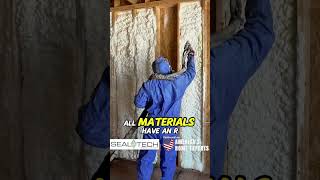
0:00 - The setup: Jack Stimach from Seal Tech Insulation introduces the Pillow Test — a hands-on way to feel the difference between open cell and closed cell spray foam insulation. Both types are shown side by side in an actual installation.
0:10 - Closed cell foam: Jack punches the closed cell foam and his hand stops immediately. "If you punched this, your hand would hurt," he explains. Closed cell foam is rigid, dense, and hard — it acts as a structural reinforcement in addition to insulating.
0:25 - Open cell foam: Jack pushes his hand into the open cell foam and it compresses like a pillow. "It's as soft as a pillow," he says. This softness is what gives open cell foam its exceptional sound-dampening qualities — the open cell structure absorbs sound waves rather than reflecting them.
0:45 - The key insight: Despite the dramatic difference in texture and density, Jack confirms that both open cell and closed cell spray foam perform thermally in "exactly the same way." The choice between them comes down to application: where you need structural rigidity, vapor barrier properties, or maximum R-value per inch, use closed cell. Where you need sound control or are insulating interior walls and ceilings, open cell is often the better choice.
What the Pillow Test Tells You About Open Cell vs. Closed Cell Spray Foam
☁️ Open Cell Foam — "The Pillow"
- Soft, spongy texture — compresses on contact
- Lower density (~0.5 lb/ft³)
- R-value: ~R-3.5 to R-3.7 per inch
- Excellent sound dampening
- Expands to fill every cavity completely
- Lower cost per board foot
- Best for interior walls, ceilings, attics
- Not a vapor barrier — breathes
🪨 Closed Cell Foam — "The Rock"
- Rigid, hard texture — does not compress
- Higher density (~2 lb/ft³)
- R-value: ~R-6.5 to R-7 per inch
- Acts as a vapor barrier
- Adds structural rigidity to walls
- Higher cost per board foot
- Best for crawl spaces, rim joists, exterior walls
- Resists moisture and water intrusion
Open Cell vs. Closed Cell Spray Foam: Same Thermal Performance, Different Physical Properties
The most surprising thing Jack reveals in the open cell vs. closed cell spray foam Pillow Test is that despite the dramatic difference in texture — one as soft as a pillow, one as hard as a rock — both types of spray foam insulation perform thermally in "exactly the same way." Both create a continuous air seal that stops heat transfer through air movement, which is the primary mechanism of heat loss in most Michigan homes.
The difference in R-value per inch (R-3.7 for open cell vs. R-6.5 for closed cell) matters when space is limited — like a 2x4 wall where you can only fit 3.5 inches of foam. In that scenario, closed cell gives you R-22 vs. open cell's R-13. But in an attic where you can spray 6–8 inches of open cell foam, the total R-value is comparable and the cost is significantly lower.
Open Cell vs. Closed Cell Spray Foam: Which Is Right for Your South Lyon Home?
| Location in Home | Recommended Type | Why |
|---|---|---|
| Crawl space walls & floor | Closed Cell | Vapor barrier + moisture resistance essential |
| Rim joists | Closed Cell | Maximum R-value in limited space, vapor control |
| Exterior walls (2x4 framing) | Closed Cell | Higher R-value per inch in tight cavity |
| Exterior walls (2x6 framing) | Open or Closed Cell | More space allows open cell at lower cost |
| Attic — cathedral ceiling | Closed Cell | Vapor control + structural support for roof deck |
| Attic — open floor | Open Cell | Large area, lower cost, excellent air seal |
| Interior walls (sound) | Open Cell | Superior sound dampening — "no echo chamber" |
| Basement walls | Closed Cell | Moisture and vapor barrier critical below grade |
South Lyon, MI Note: South Lyon sits in Oakland County with a mix of newer subdivisions and older ranch homes. In newer 2x6 construction, open cell foam is often the cost-effective choice for walls and attics. In older 2x4 ranch homes — common throughout South Lyon and Milford — closed cell is typically recommended for exterior walls to maximize R-value in the limited cavity space. Seal Tech will assess your specific home and recommend the right type for each location.
Seal Tech Installs Open Cell and Closed Cell Spray Foam Across Southeast Michigan
Seal Tech Insulation installs both open cell and closed cell spray foam insulation for homeowners across Southeast Michigan. Whether you need open cell vs. closed cell spray foam guidance or a full installation, we serve:
Not Sure Which Foam Is Right?
Seal Tech will assess your home and recommend open cell or closed cell for each specific location — at no charge.
Get Free Evaluation 📞 (866) 775-3626

📍 Serving South Lyon & SE Michigan
Open cell and closed cell spray foam installation in South Lyon, Milford, Novi, and 20+ more cities across Southeast Michigan.
South Lyon Service Area →
As seen on America's Home Experts, Seal Tech Insulation is a trusted provider of spray foam insulation, attic insulation, and crawl space solutions throughout Detroit and Southeast Michigan.
Open Cell or Closed Cell? Seal Tech Will Tell You Exactly What Your Home Needs.
Free evaluation for South Lyon, MI homeowners. No pressure, no upselling.
Schedule Free Evaluation 📞 (866) 775-3626