
Serving Ann Arbor & Washtenaw County
Spray Foam Insulation in Ann Arbor, MI
Open- and closed-cell spray foam for rim joists, crawl spaces, walls, and new construction — the assemblies fiberglass batts don't seal, not just fill. Below: how the two foam types differ, where each gets used on an Ann Arbor property, what the job actually looks like, and typical pricing. Not sure spray foam is your problem? Start with the Ann Arbor decision guide instead.
Why it matters here
Batts fill space. Spray foam seals it.
Ann Arbor sits in IECC Climate Zone 5A. A lot of the area's rim joists — the band of framing around the top of the foundation wall, where the house sits on the foundation — were built with fiberglass batts stuffed into the cavity and nothing else. That's true across a wide range of construction eras here: the postwar ranches and cape cods in Burns Park and around the Old West Side, and the older pre-1945 balloon-frame homes near Kerrytown, where the rim joist may never have been insulated at all.
Batts slow heat transfer, but they don't stop air from moving around their edges, through gaps at the sill plate, or around wiring and plumbing penetrations. Cold air migrates freely through those gaps all winter, which is why a rim joist that "has insulation" can still feel like it has none. Closed-cell spray foam applied directly to the joist face and the foundation wall above the mudsill eliminates that air path entirely, rather than just adding another layer of material for air to move around. It's usually the single fastest, most noticeable comfort improvement available in an older home, and it often shows up on the very next gas bill.
Signs to look for
Is this actually a spray foam problem?
These are the symptoms that usually point to the envelope — rim joist, crawl space, or wall cavity — rather than the attic. (For attic-specific symptoms like ice dams or an uneven upstairs, see the attic insulation guide instead.)
Cold floors over a crawl space or basement
A room directly above an unsealed crawl space or rim joist often stays several degrees colder than the rest of the house, no matter how the furnace is set.
A basement that never warms up
If the basement feels clammy or cold year-round, an unsealed rim joist and foundation wall are usually letting outside air in continuously.
Musty smell or visible moisture in a crawl space
Vented, unsealed crawl spaces pull in humid outside air that condenses on cool surfaces — a closed, sealed, and insulated crawl space largely eliminates this.
New construction or an addition in progress
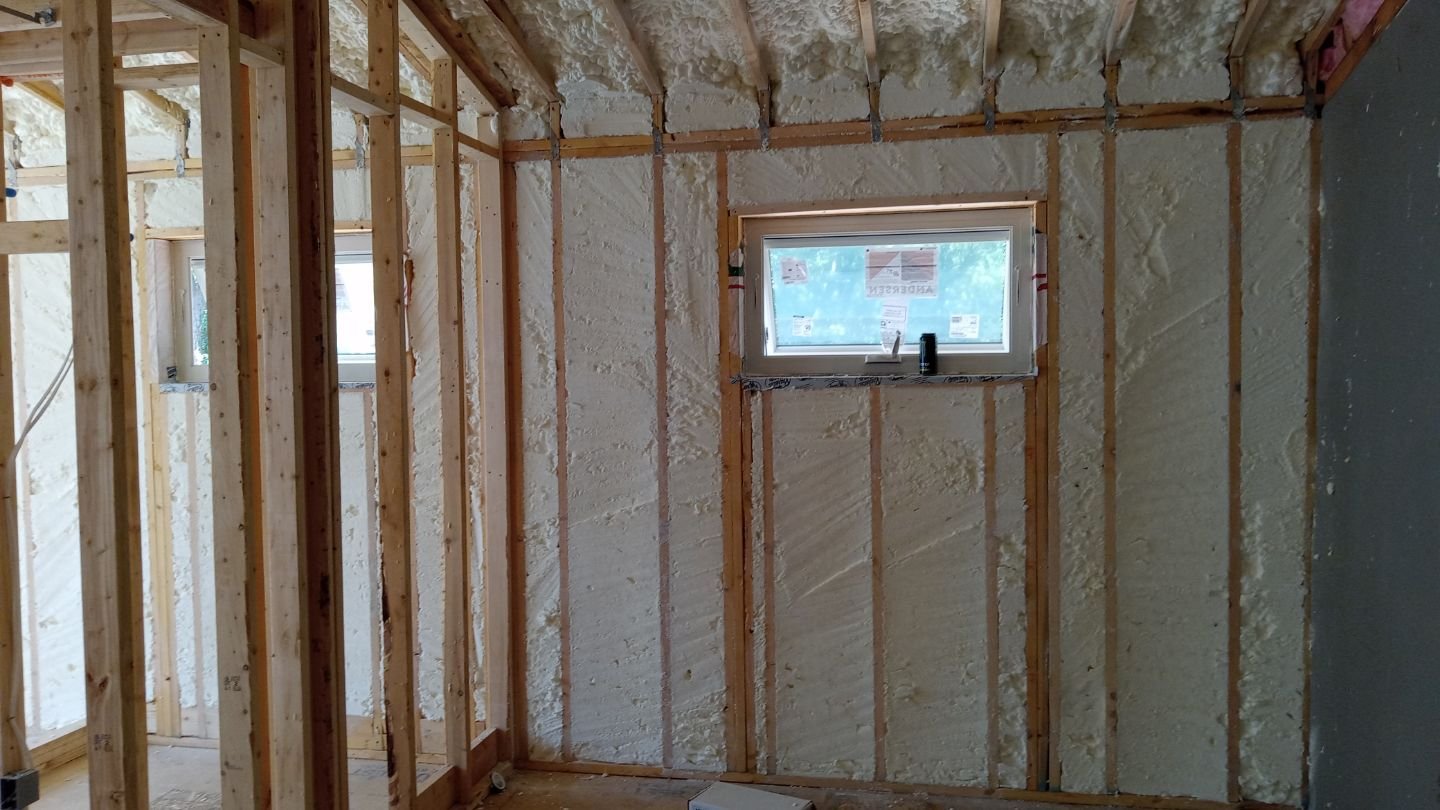
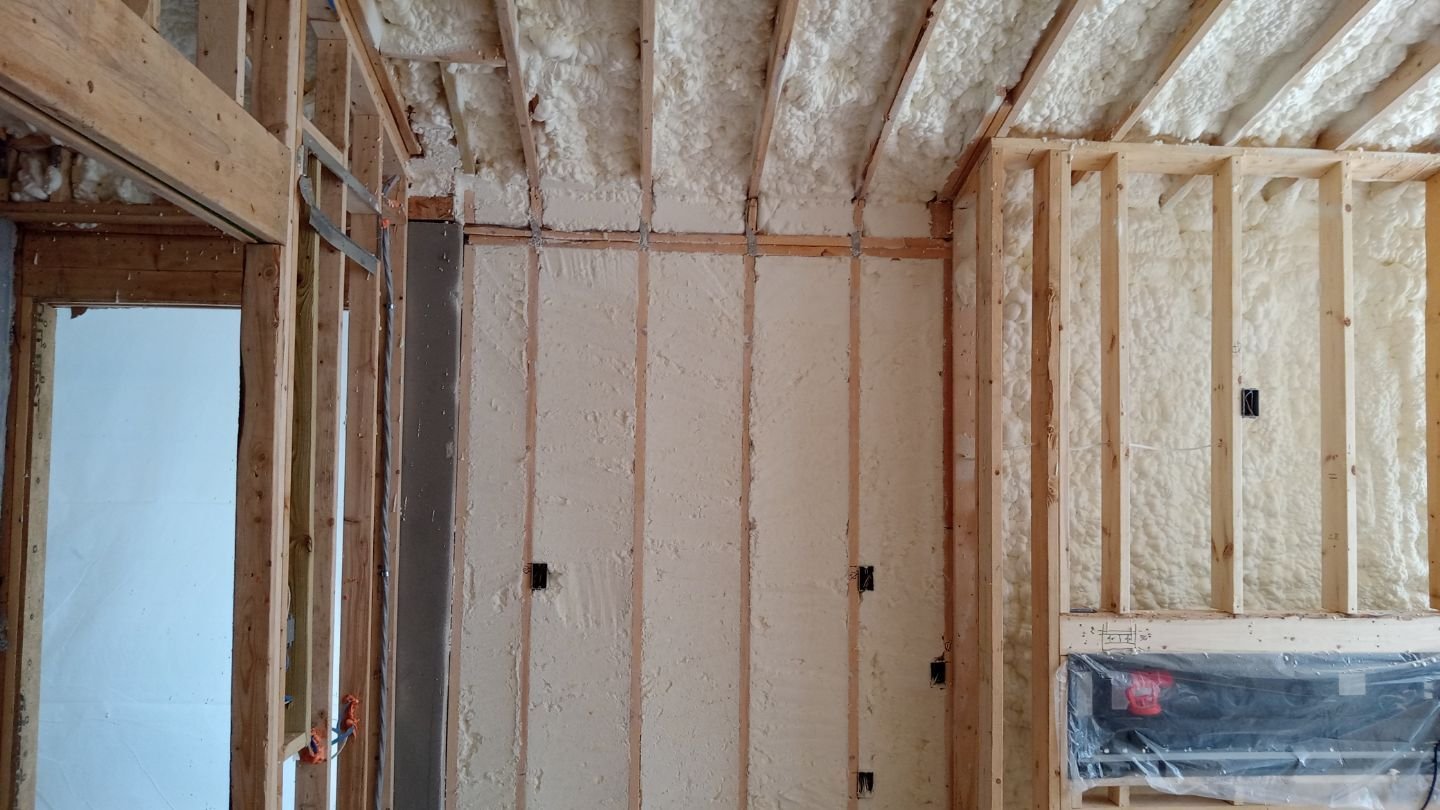
Spray foam specified before drywall goes up seals the envelope from day one, instead of retrofitting around finished walls later.
Choosing the right foam
Open-cell or closed-cell?
The two types solve different problems and aren't interchangeable. We specify based on the assembly and where moisture is or isn't a factor, not a default.
Open-Cell Foam
A lighter, spongier foam that expands significantly during application, filling irregular cavities completely.
- Lower density, lower cost per board foot
- Good air-seal for interior applications: attics, cathedral ceilings, interior walls
- Sound-dampening properties useful between floors or shared walls
- Vapor-permeable — not a moisture barrier, so not the right choice below grade or on an exterior-facing surface
Closed-Cell Foam
A denser, rigid foam with a higher R-value per inch, meaning more thermal performance in a thinner application.
- Acts as both an air barrier and a Class II vapor retarder in one step
- The standard choice for rim joists, crawl space and basement walls, and exterior applications
- Adds meaningful structural rigidity to the assembly it's applied to
- Higher cost per board foot, offset by needing less thickness to hit the same R-value
Why not just add more batts?
Spray foam vs. fiberglass batts
Fiberglass batts resist heat conduction but do nothing to stop air movement, and they lose R-value over time as they settle, compress, or get pushed aside by wiring and plumbing work. A rim joist stuffed with batts can look insulated on inspection while still leaking air freely around every edge. Spray foam solves a fundamentally different problem: it bonds to the framing, expands to fill irregular gaps batts can't reach, and doesn't settle or degrade the way fiberglass does over a decade or two.
That's not an argument that batts are always wrong — they're a reasonable, lower-cost choice in some interior wall cavities where air sealing isn't the primary concern. It's why we evaluate the specific assembly rather than defaulting to one material everywhere on a property.
Where we apply it
Common spray foam applications in Ann Arbor
Rim Joists
Closed-cell foam on the joist face and foundation wall above the mudsill — the single most common job we do in Ann Arbor's older housing stock, and usually the best return on investment for comfort.
Crawl Spaces
Closed-cell on the foundation walls, paired with a ground vapor barrier, converts a vented, humid crawl space into a sealed, conditioned one. See our crawl space insulation service.
New Construction
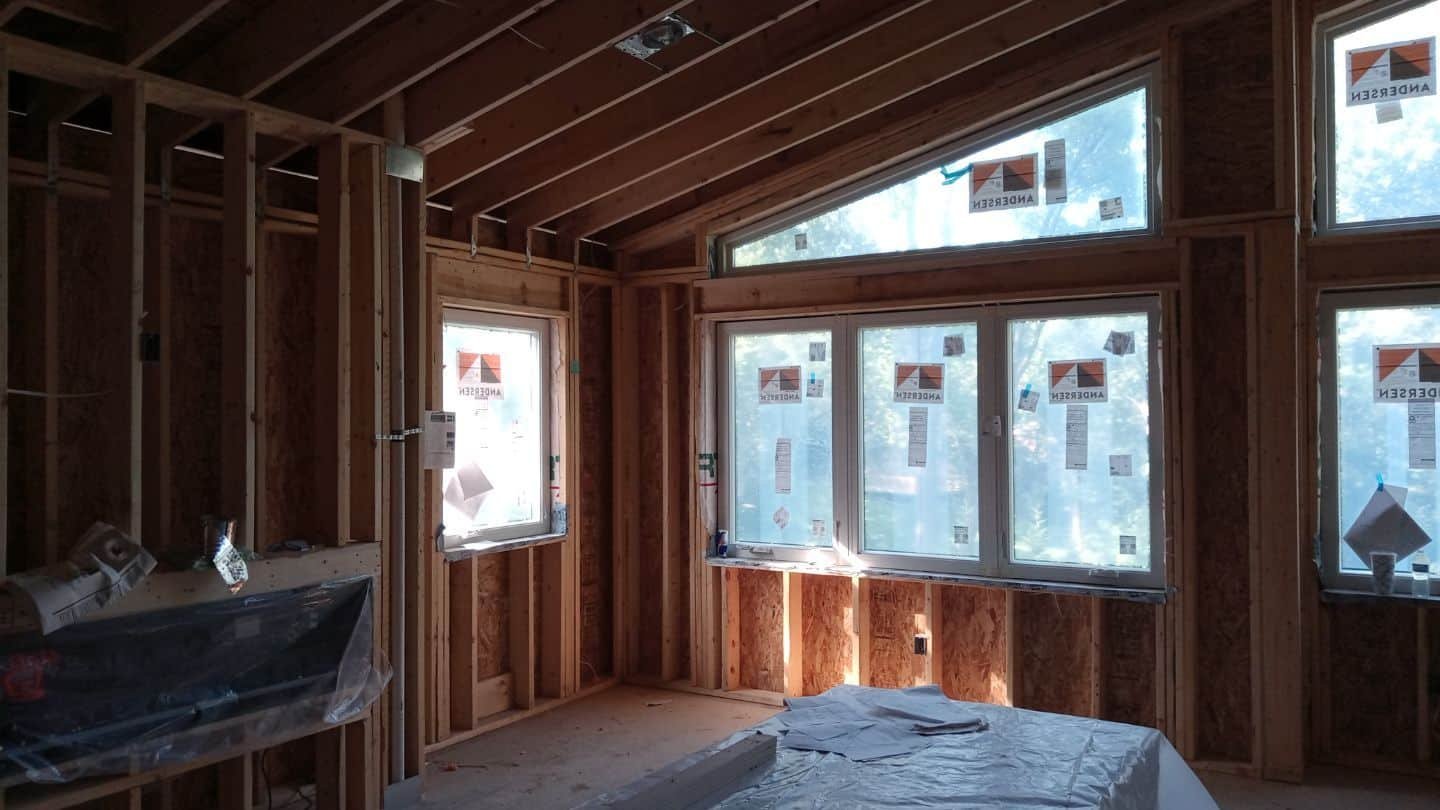
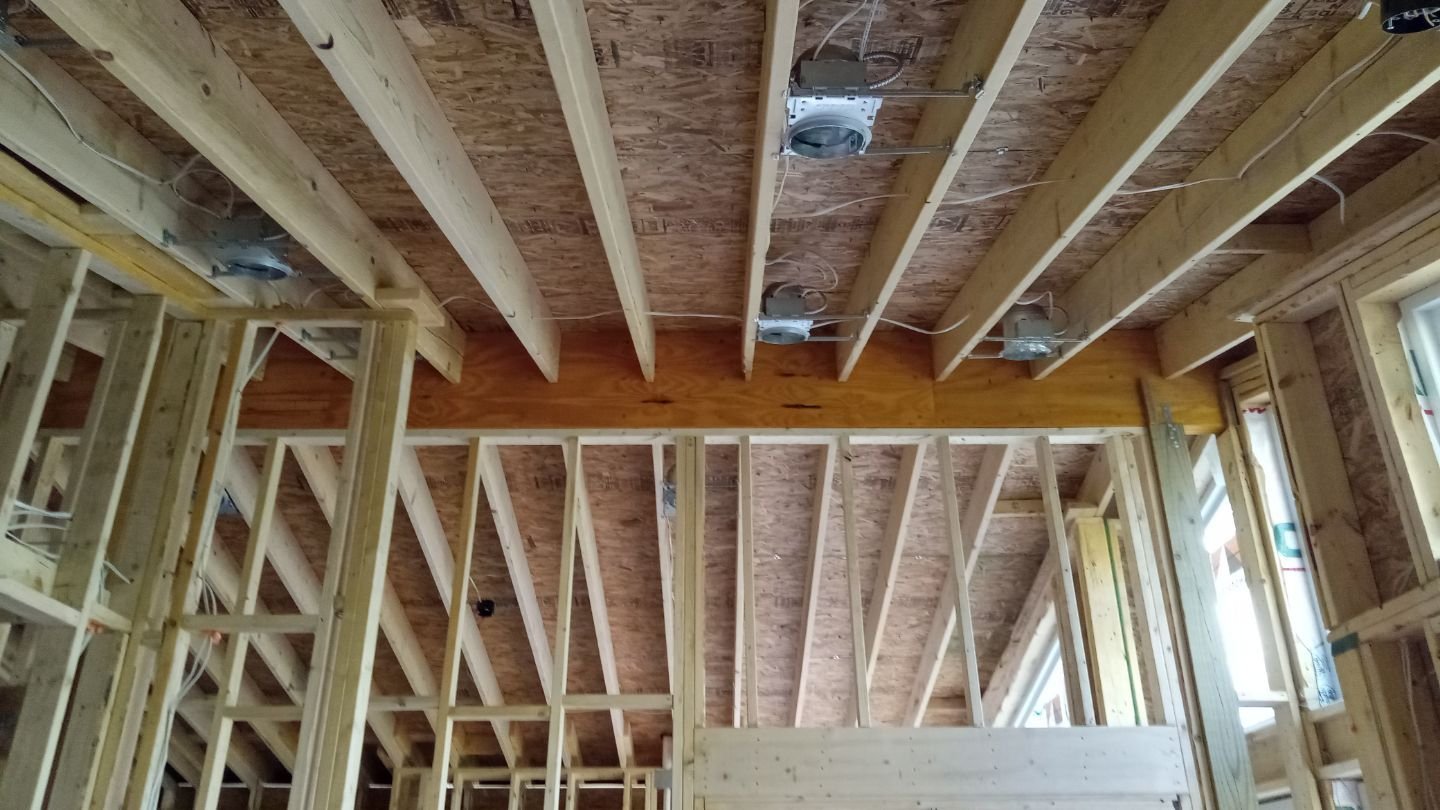
Specified at the framing stage, before drywall, so the envelope hits code minimums with margin from day one rather than being retrofitted later.
Metal Buildings & Pole Barns
Metal is a poor insulator and an excellent conductor, so uninsulated steel panels sweat whenever warm, humid air meets a cold surface. Closed-cell foam bonds directly to the panel, sealing every rib and seam and removing the cold surface that causes condensation.
Code & safety
Permits, code, and safety on an Ann Arbor job
Michigan's residential energy code, based on the 2021 IECC for Climate Zone 5A, sets minimum R-values by assembly rather than by material, so spray foam has to meet the same thermal performance thresholds as any other insulation — it doesn't get a pass on code minimums just because it air-seals as well as it insulates. On a new-construction or addition permit, the City of Ann Arbor's building department typically requires an insulation inspection before drywall closes the wall or ceiling cavity, so we schedule application to leave that inspection window open rather than spraying too late in the framing sequence.
Spray foam that will be left exposed in an occupied space — a basement ceiling or an unfinished attic accessed regularly, for example — generally needs a code-compliant thermal or ignition barrier over it, since foam itself is combustible. We account for that in the quote rather than leaving it as a surprise change order once the inspector flags it.
The process
How spray foam is applied
We assess the assembly, access, current insulation condition, and any moisture issues, and confirm whether open-cell, closed-cell, or a combination is the right fit before quoting anything.
The work area is cleaned and anything that shouldn't be sprayed — ductwork, wiring you want visible, finished surfaces — is masked off first.
Foam is applied in controlled passes to reach the target thickness without overheating the substrate or off-gassing improperly, which is why this isn't a DIY-friendly material.
The foam expands and cures into a solid, continuous air barrier within minutes; any excess is trimmed flush where it needs to sit behind drywall or other finish material.
We review the finished work with you, point out what changed, and answer questions before we consider the job complete.
What it costs
Spray foam insulation in Ann Arbor: pricing
Final pricing depends on access, square footage, and current insulation condition — confirmed with a free on-site evaluation before any work begins. For statewide ranges and what drives cost, see our Michigan spray foam cost guide.
| Job Type | Typical Cost | Notes |
|---|---|---|
| Open-cell foam | $1.00–$1.60 / board ft | Attics, cathedral ceilings, interior sound control |
| Closed-cell foam | $1.60–$2.60 / board ft | Rim joists, crawl space & basement walls, exterior applications |
| Rim joist job, 1,400 sq ft footprint | $1,200–$2,500 installed | Single-family ranch, typical scope, one day |
| Crawl space encapsulation | $1,800–$4,500 | Depends on square footage and moisture conditions |
| New construction, per-project quote | Varies by square footage | Scoped from plans before framing is closed in |
DTE Energy and Consumers Energy both run home energy efficiency rebate programs that can apply to qualifying insulation work; amounts change annually, so we confirm current incentives during your estimate.
Ann Arbor project imagery
Real project visuals
Common questions
Further reading: Where to Insulate in a Home (U.S. Department of Energy).
Spray foam FAQs for Ann Arbor
What's the difference between open-cell and closed-cell foam?
Open-cell is lower density, vapor-permeable, and better suited to interior applications like attics and sound control. Closed-cell is denser, acts as a moisture barrier and structural add, and is the standard for rim joists, crawl spaces, and anything below grade or exterior-facing.
How much does spray foam cost in Ann Arbor?
Open-cell runs $1.00–$1.60 per board foot and closed-cell runs $1.60–$2.60 per board foot. A typical rim joist job on a 1,400 sq ft ranch runs $1,200–$2,500 installed. We confirm exact pricing with a free on-site evaluation.
Can spray foam be used in an existing home, or only new construction?
Both. Rim joists, crawl spaces, and accessible wall cavities can be foamed in an existing home without major demolition. New construction allows foam to be specified at the framing stage for full-envelope coverage.
Is spray foam safe for metal buildings and pole barns?
Yes — closed-cell foam bonds directly to steel panels, sealing seams and eliminating the cold surface that causes condensation inside metal buildings.
How long does spray foam last, and does it need maintenance?
Properly cured spray foam doesn't settle, sag, or lose R-value the way fiberglass batts can over time, and it typically requires no ongoing maintenance once installed.
How long does a spray foam job take?
Most single-family rim joist or crawl space jobs are completed in a single day. Larger new-construction or commercial jobs are scoped individually during the estimate.
Do I need a permit for spray foam insulation?
New construction, additions, and finished-space conversions typically require a permit and an insulation inspection through the City of Ann Arbor before drywall goes up. Retrofitting an existing rim joist or crawl space usually doesn't. We confirm what applies to your specific job during the estimate.
Is spray foam safe to be around during and after installation?
The space needs to be vacated during application and for a re-entry period afterward while the foam fully cures — typically a matter of hours. We'll confirm the exact timeline for your job's size and ventilation before work starts. Once cured, foam is chemically inert and doesn't off-gas under normal conditions.
Not sure this is the right service for my problem?
Use the Ann Arbor decision guide to check whether your issue is an attic problem instead, or call us at (866) 775-3626.
Start with a conversation
Get a free spray foam estimate for Ann Arbor
Tell us about the space and we'll get back to you with a written quote.