
Some of the most expensive heat loss in a Michigan home happens in a spot most homeowners have never heard of: the rim joist. It is the band of wood that sits on top of your foundation wall and wraps around the perimeter of the basement, right where the framing meets the concrete. It is rarely insulated well, and in an older home it often is not insulated at all. Sealing it with rim joist spray foam insulation is one of the smallest, fastest jobs a contractor can do — and one of the highest-return.
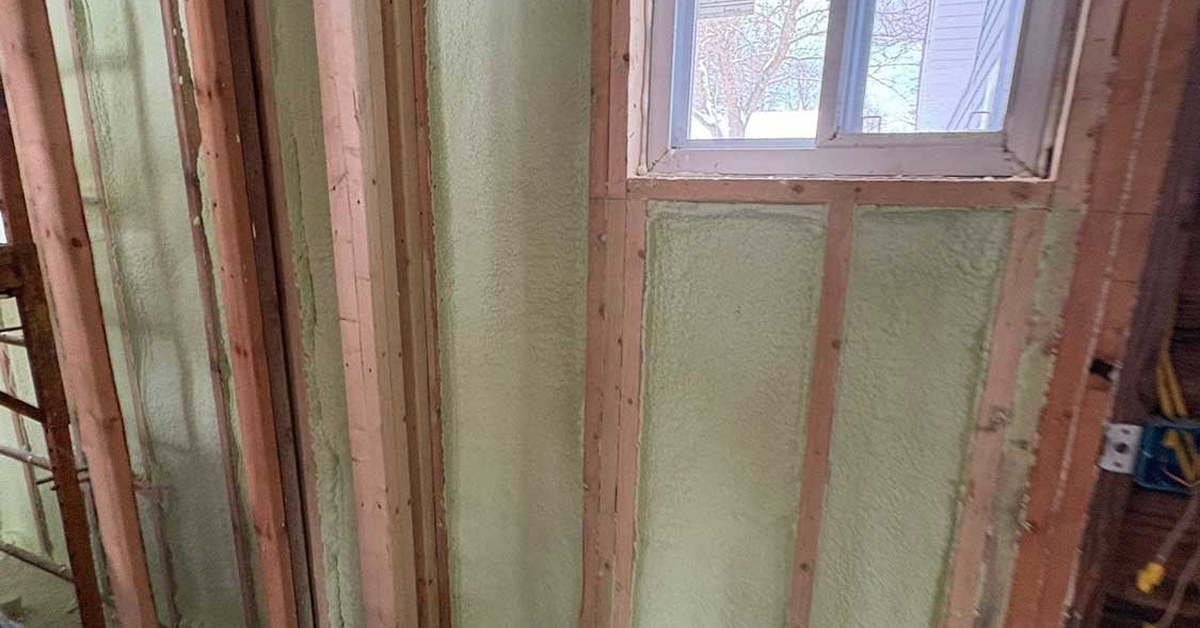
What is the rim joist, and why does it leak so much?
Picture the top of your basement wall. The horizontal board resting on the foundation is the sill plate; the vertical band running around the edge above it is the rim joist (also called the band joist). Behind it, between the floor joists, are open pockets called joist bays. In many homes those bays are either empty or stuffed with a scrap of fiberglass batt.
The problem is that fiberglass does nothing to stop air. The rim joist has seams where wood meets wood and wood meets concrete, and cold Michigan air pours through those seams all winter. Warm, humid indoor air also reaches the cold band and condenses there, which over time leads to damp wood, mold, and rot. Because this area sits at the top of the basement, it drives the “stack effect” that pulls cold air into the whole house.
Why spray foam is the right fix
Closed-cell spray foam solves the rim joist problem in a single step. It expands to fill every gap and seam, hardens into a rigid layer, and acts as both an insulator and an air barrier. Unlike fiberglass, it does not let air wash through it, and unlike fiberglass it also functions as a vapor barrier — so warm indoor air never reaches the cold band to condense. That combination is exactly what a Michigan basement needs.
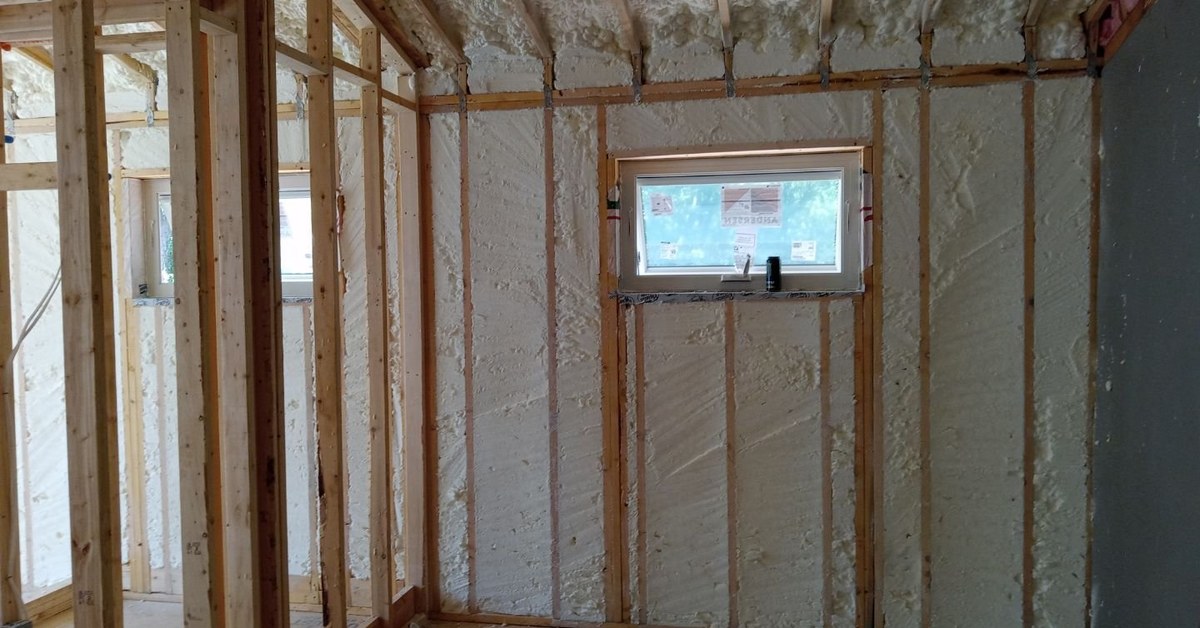
Here is what makes rim joist insulation with closed-cell foam so effective:
- High R-value in a thin layer. Closed-cell foam delivers roughly R-6 to R-7 per inch, so two inches gives you strong performance without eating into the joist bay.
- Air sealing built in. The foam seals the seams that fiberglass leaves wide open, stopping the drafts you feel at the floor.
- Moisture protection. By keeping warm air off the cold rim, foam prevents the condensation that rots band joists over time.
- No separate vapor barrier. Closed-cell foam is its own vapor retarder, which simplifies the whole assembly.
The benefits homeowners actually notice
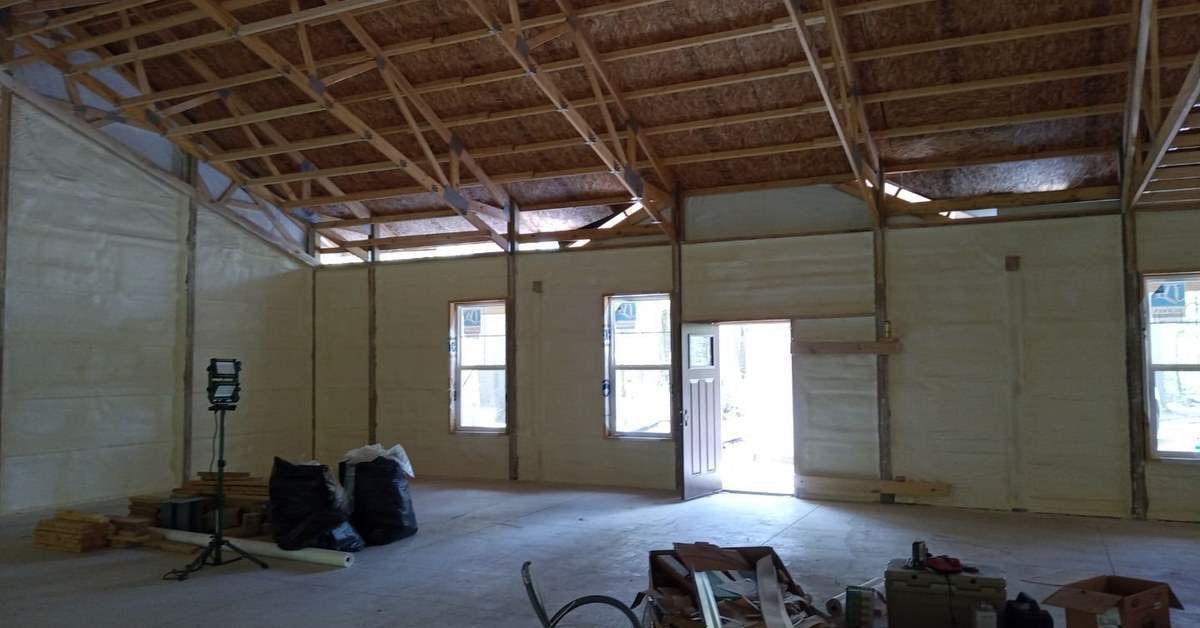
The band joist area is estimated to account for a meaningful share of a home’s total air leakage — up to around 30 percent in a leaky older house. Seal it, and the change is immediate: basements feel warmer, the cold draft along the floor upstairs eases, and the furnace cycles less. Because the job is small, the payback period is short compared with larger insulation projects. For many Southeast Michigan homeowners, the rim joist is the single best first move before spending on bigger upgrades.
How the job works
Rim joist spray foam is one of the fastest insulation jobs there is. A technician clears access around the basement perimeter, sprays two to three inches of closed-cell foam into each joist bay and across the band, and trims any excess once it cures. Most homes are finished in a single day with no disruption to the floors above. If your basement already has fiberglass stuffed into the bays, it is removed first so the foam can seal directly to the wood and concrete.
Rim joist foam and the bigger picture
Sealing the rim joist works best as part of a whole-home air-sealing strategy. It pairs naturally with crawl space sealing below and attic insulation above, so the home is tight at both the top and bottom where the stack effect is strongest. If you are already considering basement or whole-home work, our team can fold the rim joist into the same visit. You can learn more about our approach to spray foam insulation and how it is applied.
What happens if you ignore the rim joist
Leaving the rim joist uninsulated is not a neutral decision — it quietly costs you in three ways. First, it wastes energy: the constant air leakage through the band forces your furnace to run longer all winter. Second, it hurts comfort: that leaked cold air pools in the basement and rises into the first floor, creating the cold-floor feeling homeowners so often complain about. Third, and most damaging over time, it invites moisture problems. When warm indoor air reaches the cold band joist, it condenses on the wood, and repeated cycles of dampness lead to mold and eventually rot in the very framing that supports your floors.
Signs your rim joist needs attention
You usually cannot see the rim joist without going into the basement and looking up where the wall meets the ceiling, but the symptoms are easy to spot from the living space:
- Cold drafts felt at floor level near exterior walls, especially in winter.
- A basement that is noticeably colder than the rest of the house.
- Fiberglass batts stuffed loosely into the joist bays, often dark or dirty from filtering air.
- Condensation, frost, or water stains on the wood band around the top of the foundation.
- Visible daylight or obvious gaps where the framing meets the concrete.
Any one of these is a sign that air is moving freely through the band area — and that sealing it will pay off quickly.
How rim joist foam fits a whole-home plan
Building scientists describe heat loss in a house using the “stack effect”: warm air rises and escapes near the top of the home, which pulls cold air in near the bottom to replace it. The rim joist sits right at that bottom intake point, so sealing it directly weakens the engine that drives drafts throughout the house. That is why professionals so often pair rim joist foam with attic air-sealing above — together they close both ends of the stack. Because the rim joist job is small, inexpensive, and completed in a day, it is frequently the first step in a staged plan to tighten up an older Michigan home.
Frequently asked questions
How much does rim joist spray foam insulation cost?
Most rim joist projects run about $1,200 to $3,000 depending on the size of the basement perimeter and whether old insulation has to be removed first. It is one of the most affordable upgrades per dollar of comfort gained.
Open-cell or closed-cell foam for the rim joist?
Closed-cell is strongly preferred here. Its higher R-value and vapor-barrier properties are exactly what a cold, moisture-prone band joist needs in Michigan.
Can I do it myself with can foam?
Small kits exist, but professional closed-cell foam gives a thicker, more consistent seal and avoids the health and fire-code pitfalls of a partial DIY job. Professional installation also covers the whole perimeter evenly.
Seal your rim joist this season
If your basement is cold or drafty, the rim joist is the place to start. Seal Tech Insulation provides free estimates for rim joist spray foam insulation across Southeast Michigan. Call (866) 775-3626 or request a free estimate and we will show you exactly where your home is losing heat.
Further reading: Where to Insulate in a Home (U.S. Department of Energy).
Ready for a more comfortable home?
Get a free, no-pressure estimate from the Seal Tech crew. Spray foam, attic, wall and crawl space insulation across Southeast Michigan, backed by a lifetime warranty.