
Michigan homeowners know the struggle well: furnaces that run non-stop in January, second floors that never cool down in July, and utility bills that climb higher every year. More often than not, the real problem is not your HVAC system at all—it is air leaking through poorly insulated walls, attics, and crawl spaces. Fortunately, spray foam insulation offers a permanent solution. Because it expands to seal every gap and crack, it stops energy loss at the source. Therefore, if you want a more comfortable, energy-efficient home across Southeast Michigan, understanding how spray foam works is the smartest first step.
What Is Spray Foam Insulation?
Spray foam insulation is a two-part liquid material that is sprayed onto surfaces, where it rapidly expands into a solid, durable barrier. As it expands, it fills cavities, gaps, and hard-to-reach corners that traditional fiberglass batts simply cannot cover. Once cured, the foam creates both an insulating layer and an airtight seal in a single application. Consequently, it delivers a much higher level of performance than older insulation methods. Moreover, because the material is applied on-site and molds to your home’s exact structure, there are no seams or joints for air to escape through.
Open-Cell vs. Closed-Cell Spray Foam
Before you invest, it helps to understand the two main types of spray foam. Each one suits different areas of the home, and a qualified installer will recommend the right product for each application.
i. Open-Cell Spray Foam: This lighter, softer foam expands generously to fill large cavities, which makes it cost-effective for interior walls and attics. In addition, it excels at dampening sound, so it is a popular choice for quieter bedrooms and media rooms.
ii. Closed-Cell Spray Foam: This denser, more rigid foam delivers a higher R-value per inch and blocks moisture, which makes it ideal for crawl spaces, basements, and exterior walls. Furthermore, it adds structural strength and resists water, giving your home extra protection against Michigan’s freeze-thaw cycles.
Ultimately, choosing between open-cell and closed-cell spray foam depends on the location, your budget, and your performance goals. That is exactly why professional guidance matters so much.
The Key Benefits of Spray Foam Insulation
The advantages of spray foam reach far beyond a warmer house. In fact, the long-term spray foam insulation benefits are why so many Southeast Michigan homeowners consider it a worthwhile investment.
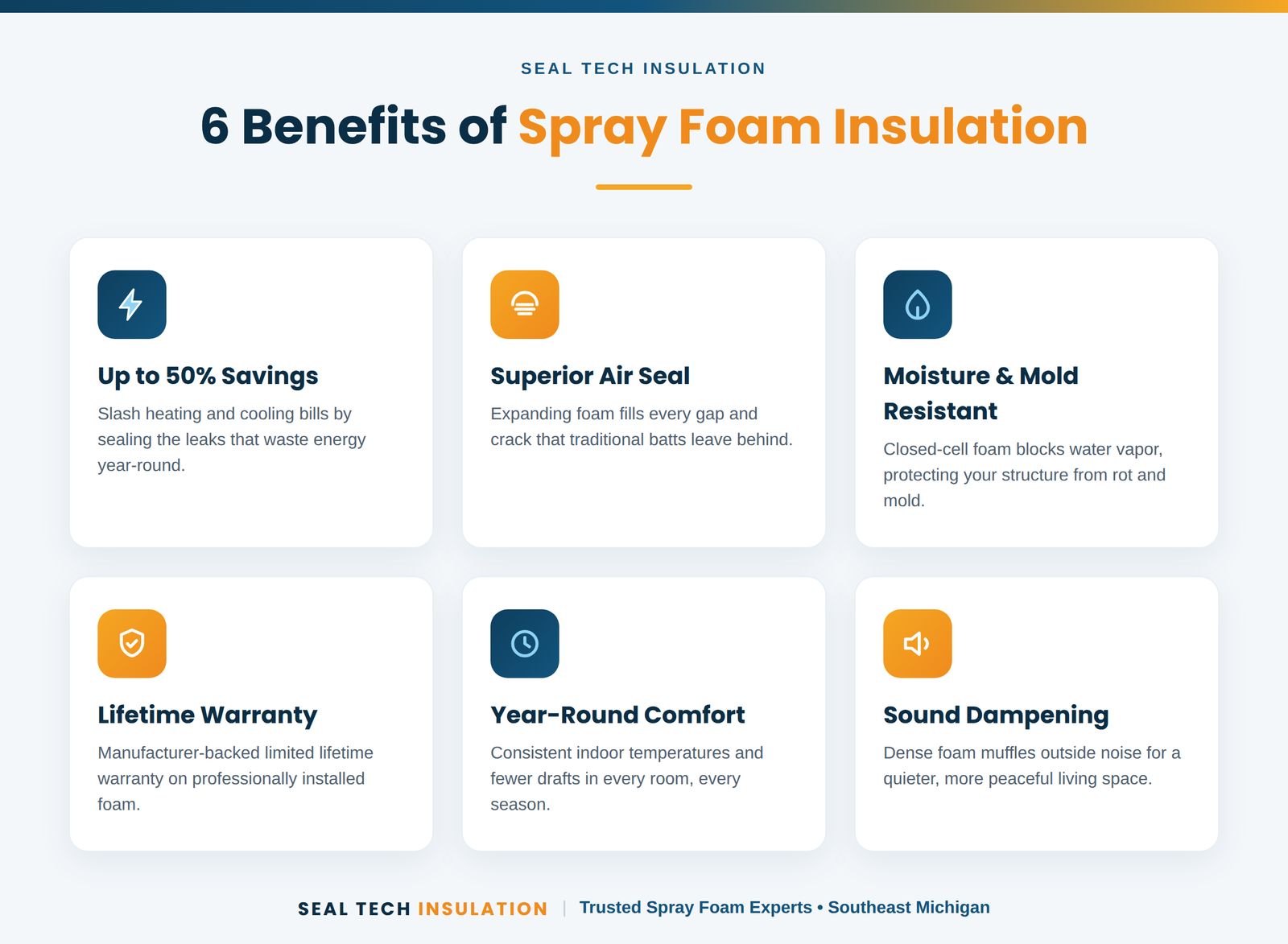
Lower Energy Bills: By sealing the leaks that waste conditioned air, spray foam can reduce heating and cooling costs by up to 50%. As a result, the insulation often pays for itself over time.
Superior Air Sealing: Unlike batts, foam expands into every gap, which eliminates the drafts that make rooms uncomfortable and force your HVAC system to work overtime.
Moisture and Mold Resistance: Closed-cell foam blocks water vapor, and therefore it helps protect your framing from rot, mildew, and mold growth throughout the year.
Lasting Durability: Spray foam does not sag or settle like other materials. Instead, it holds its shape and performance for decades, which is why professional installations often carry a manufacturer-backed limited lifetime warranty.
Year-Round Comfort: Finally, consistent indoor temperatures and reduced outside noise create a calmer, more enjoyable living space in every season.
How Much Does Spray Foam Insulation Cost?
One of the most common questions homeowners ask is about spray foam insulation cost. The honest answer is that it varies, because several factors influence the final price. These include the size of the area, the type of foam selected, the thickness required, and how accessible the space is. Naturally, closed-cell foam generally costs more than open-cell because it uses denser material and delivers a higher R-value.
While spray foam typically carries a higher upfront price than fiberglass, it is important to view it as a long-term investment rather than a simple expense. Since the material lasts for decades and lowers your monthly bills, the lifetime value is significant. For an accurate figure tailored to your home, the best approach is to request a free, no-obligation estimate. That way, you receive a clear price based on your specific project rather than a rough guess.
Where Spray Foam Works Best in Your Home
Spray foam is remarkably versatile, and it performs well throughout the entire home. In the attic, it prevents the heat loss that drives up winter bills. In crawl spaces and basements, closed-cell foam controls moisture and cold floors. Within existing walls, injected foam upgrades comfort without a major remodel. In addition, spray foam is an excellent choice for new construction, metal buildings, and commercial projects where energy performance and soundproofing both matter. Because each area has unique requirements, a thorough assessment ensures every space gets the right solution.
Choosing Spray Foam Insulation Contractors in Southeast Michigan
The quality of your installation matters just as much as the material itself. Poorly applied foam can shrink, leave gaps, or cure incorrectly, which undermines its performance. For that reason, choosing experienced spray foam insulation contractors is essential. Look for a team with a proven track record, proper safety training, and manufacturer certifications. A dependable contractor will also take the time to assess your home, explain your options clearly, and keep the work area clean from start to finish.
At Seal Tech Insulation, we have served homeowners and businesses across Detroit, Ann Arbor, Lansing, Toledo, and the surrounding communities since 2000. Because we specialize in spray foam, we understand how to insulate Michigan homes for our demanding climate. From attics and crawl spaces to full new-construction projects, our team delivers professional results backed by a limited lifetime warranty.
Frequently Asked Questions About Spray Foam Insulation
How long does spray foam insulation last? When it is professionally installed, spray foam can last the lifetime of your home. Unlike fiberglass, it does not sag, settle, or lose its shape, so it keeps performing decade after decade.
Is spray foam insulation safe? Yes. Once the foam has fully cured, it is inert, non-toxic, and hypoallergenic. Certified installers also follow strict safety procedures during application to protect your family and your home.
Can spray foam be added to an existing home? Absolutely. Injected wall foam and attic applications let you upgrade an older home’s efficiency without a full remodel. As a result, you gain modern comfort while keeping renovation to a minimum.
Start Saving on Energy Today
A more comfortable, efficient home is closer than you think. With the right spray foam insulation and an experienced team behind it, you can cut energy waste, silence drafts, and protect your home for decades. If you are ready to stop overpaying for heating and cooling, now is the perfect time to act. Contact Seal Tech Insulation today for a free estimate and discover how much comfort—and savings—professional spray foam insulation can bring to your Southeast Michigan home.